Pemberdayaan Kesehatan Mental Perempuan melalui Terapi Dzikir pada Komunitas Literasi Daring
-
DOI:
https://doi.org/10.58353/jop.v4i1.327Keywords:
Community Empowerment, Digital Literacy Community, Dhikr therapy, Mental health education, Women’s Mental HealthAbstract
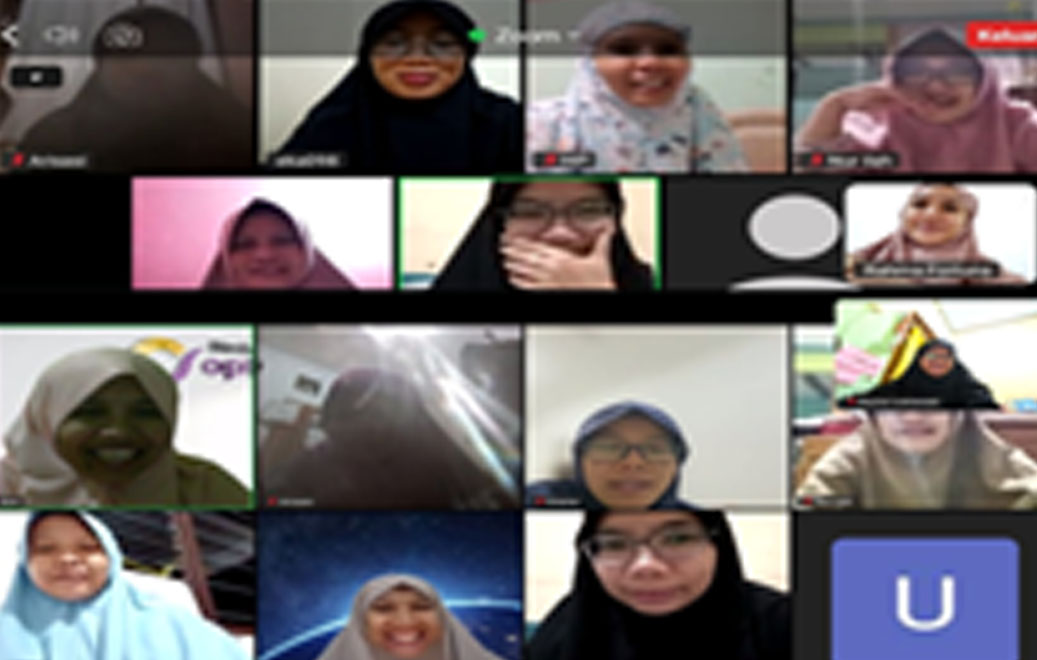
Women’s mental health in the digital era faces complex challenges, particularly psychological stress arising from multiple role demands and intensive online engagement. This community service activity aimed to empower women’s mental health through mental health education and dhikr-based therapy within an online literacy community, namely a women-dominated online book discussion community consisting of adult female members who actively participate in regular digital literacy activities. The program was conducted online in December 2025 and involved 20 active participants out of 30 invited members, with inclusion criteria of adult women who were active community members and willing to participate fully in the intervention. The methods included interactive mental health education, guided dhikr therapy practice using the istighfar recitation (astagfirullahal‘adhiim), and evaluation through pretest–posttest stress assessments accompanied by qualitative feedback. The results indicated an improvement in participants’ understanding of stress management and a descriptive decrease in stress levels following the intervention. Qualitative feedback further revealed enhanced inner calmness, emotional awareness, and perceived coping capacity in daily digital activities. These findings suggest that integrating mental health education with psycho-spiritual approaches within an online literacy community has the potential to serve as an adaptive and sustainable empowerment strategy to support women’s mental well-being.
References
Aggarwal, S., Wright, J., Morgan, A., Patton, G. C., & Reavley, N. (2023). Religiosity and spirituality in the prevention and management of depression and anxiety in young people: a systematic review and meta-analysis. BMC Psychiatry, 23(1). https://doi.org/10.1186/s12888-023-05091-2
Akbayram, H. T., & Keten, H. S. (2024). The Relationship between Religion, Spirituality, Psychological Well-Being, Psychological Resilience, Life Satisfaction of Medical Students in the Gaziantep, Turkey. Journal of Religion and Health, 63, 2847–2859. https://doi.org/https://doi.org/10.1007/s10943-024-02027-2
Ayiro, L., Misigo, B. L., & Dingili, R. (2023). Stress levels, coping strategies, and mental health literacy among secondary school students in Kenya. Frontiers in Education, 8. https://doi.org/10.3389/feduc.2023.1099020
Aziz, Z., Naz, S., & Mir, M. W. (2025). Relationship of Mental Health Literacy with Psychological Well-Being and Perceived Stress Among Pakistani University Students: Moderated by Brief Coping Skills. Social Sciences & Humanity Research Review, 3(3). https://doi.org/https://doi.org/10.63468/sshrr.090
Dolan, J. G., Hill, D. L., Faerber, J. A., Palmer, L. E., Barakat, L. P., & Feudtner, C. (2021). Association of psychological distress and religious coping tendencies in parents of children recently diagnosed with cancer: A cross-sectional study. Pediatr Blood Cancer, 68(7), e28991. https://doi.org/10.1002/pbc.28991.
Farid, F. A. G., & Nurjannah. (2024). Efektivitas Konseling Spiritual Melalui Terapi Dzikir Untuk Mengatasi Anxiety. Jurnal Online At-Taujih, 4(1). https://doi.org/https://doi.org/10.30739/jbkid.v4i1.2312
Fatima, S., Arshad, S., Farooq, Z., & Sharif, S. (2025). Religious Coping Fosters Mental Health”: Does Psychological Capital Enable Pakistani Engineers to Translate Religious Coping into Mental Wellbeing? Journal of Religion and Health, 64, 1898–1915. https://doi.org/https://doi.org/10.1007/s10943-024-02075-8
Hohls, J. K., König, H.-H., Quirke, E., & Hajek, A. (2022). Anxiety, Depression and Quality of Life-A Systematic Review of Evidence from Longitudinal Observational Studies. Int J Environ Res Public Health, 18(22), 12022. https://doi.org/10.3390/ijerph182212022.
Hu, J., Isak, G., Yalikun, S., Lu, X., & Ren, Z. (2024). Online social support and mental health during public health emergencies: Mediation by problematic social media use and moderation by lockdown/quarantine. Personality and Individual Differences, 227, 112717. https://doi.org/https://doi.org/10.1016/j.paid.2024.112717
Hulett, J. M., Corona, M., Hartman, B. M., & Bormann, J. E. (2023). A systematic review of interventional trials reporting relationships between silent mantram repetition and health in adults. Complementary Therapies in Clinical Practice, 50, 101709. https://doi.org/https://doi.org/10.1016/j.ctcp.2022.101709
Kendah Asih, Z., Sukino, A., & Sukmawati, F. (2025). Spiritualitas Islam sebagai Faktor Protektif Kesehatan Mental: Tinjauan Interdisipliner dalam Perspektif Pendidikan Agama dan Psikologi Klinis. Kartika: Jurnal Studi Keislaman, 5(2), 895–908. https://doi.org/https://doi.org/10.59240/kjsk.v5i2.337
Lazarus, R. S., & Susan Folkman. (1984). Stress, Appraisal, and Coping. Penerbit Springer Publishing Company.
Li, R., Liu, X., Jia, S., Lai, L., Lu, X., Xiong, Q., … Ren, Z. (2025). Effectiveness of online social support interventions for psychological distress: A three-level meta-analysis of randomized controlled trials. Journal of Affective Disorders, 393, 120297. https://doi.org/https://doi.org/10.1016/j.jad.2025.120297
Maral, S., Bilmez, H., & Satici, S. A. (2024). Positive Childhood Experiences and Spiritual Well-Being: Psychological Flexibility and Meaning-Based Coping as Mediators in Turkish Sample. Journal of Religion and Health, 63, 2709–2726. https://doi.org/https://doi.org/10.1007/s10943-024-02079-4
Marmi, M., & Riyadi, S. (2025). Islamic principles in nursing leadership: Lesson learned from Rufaida Al-Aslami’s lens and legacy. Journal of Holistic Nursing Science, 12(1), 326–332. https://doi.org/https://doi.org/10.31603/jhns.v12i2.13718
Nagra, H., Mines, R. A., & Dana, Z. (2025). Exploring the Impact of Digital Peer Support Services on Meeting Unmet Needs Within an Employee Assistance Program: Retrospective Cohort Study. JMIR Hum Factors, 12, e68221. https://doi.org/10.2196/68221
Nidaussa’idah, R., & Nuqul, F. L. (2025). Sistematik Literatur Review: Dukungan Sosial Online Berdampak Positif Pada Kesehatan Mental. Journal Of Psychology and Social Sciences, 3(1), 1–11. Retrieved from http://jurnal.dokicti.org/index.php/JPSS/index
Nurmayunita, H., Zakaria, A., & Irawan, H. (2022). Pengaruh Pemberian Terapi Dzikir Terhadap Kesejahteraan Psikologis Lansia Di Pondok Lansia. Jurnal Ilmu Kesehatan, 11(1), 70–79. https://doi.org/https://doi.org/10.32831/jik.v11i1.469
Pankowski, D., & Wytrychiewicz-Pankowska, K. (2023). Turning to Religion During COVID-19 (Part I): A Systematic Review, Meta-analysis and Meta-regression of Studies on the Relationship Between Religious Coping and Mental Health Throughout COVID-19. J Relig Health, 62(1), 510–543. https://doi.org/10.1007/s10943-022-01703-5
Riyadi, S., Marmi, M., Madury, S. Al, & Farid, M. (2025). Smoking Cessation Behavior Among Madurese Adolescents: The Role of Social Capital and the Theory of Planned Behavior. Media Publikasi Promosi Kesehatan Indonesia, 8(9), 971–980. https://doi.org/10.56338/mppki.v8i9.7883
Syafrizal, S., Bahagia, Rosdi, S. ., Erdiwansyah, Muhtadin, & Anis, S. (2025). Strengthening Lifelong Learning: The Impact of Community-Based Education Initiatives on Social Inclusion. International Journal of Community Service, 2(1), 128–138. Retrieved from https://e-journal.scholar-publishing.org/index.php/ijcs/article/view/155
Wijayanti, L., Septianingrum, Y., Sultoni, A., Fitriasari, A., Wardani, E. M., & Ramadhani, L. (2025). Effectiveness of Combination Dhikr and Salawat on Anxiety and Sleep Quality in Hemodialysis Patients in Indonesia: A Randomized Controlled Trial. J Relig Health, 64(4), 2542–2557. https://doi.org/10.1007/s10943-025-02342-2
Wilzer, E., Zeisel, A., Roessner, V., & Ring, M. (2024). Association between anxiety, depression and quality of life in male and female German students during the COVID-19 pandemic. BMC Psychiatry, 24(212). https://doi.org/https://doi.org/10.1186/s12888-024-05611-8
Zhang, H., & Wang, Y. (2025). The impact of online social support on psychological resilience and suicidal ideation among sports specialty students under academic-training dual stress: a gender-specific analysis. Front. Psychol., 16, 1637943. https://doi.org/10.3389/fpsyg.2025.1637943
Downloads
Published
Issue
Section
License
Copyright (c) 2026 JOURNAL OF PHILANTHROPY: The Journal of Community Service

This work is licensed under a Creative Commons Attribution-NonCommercial-NoDerivatives 4.0 International License.