Peningkatan Pengetahuan Siswa SMK dalam Menjalankan Pola Hidup Sehat Untuk Mencegah Berbagai Gangguan Kesehatan
DOI:
https://doi.org/10.58353/jop.v1i2.124Keywords:
Dramatic changes, Health Education, Lifestyle patterns, Various health problemsAbstract
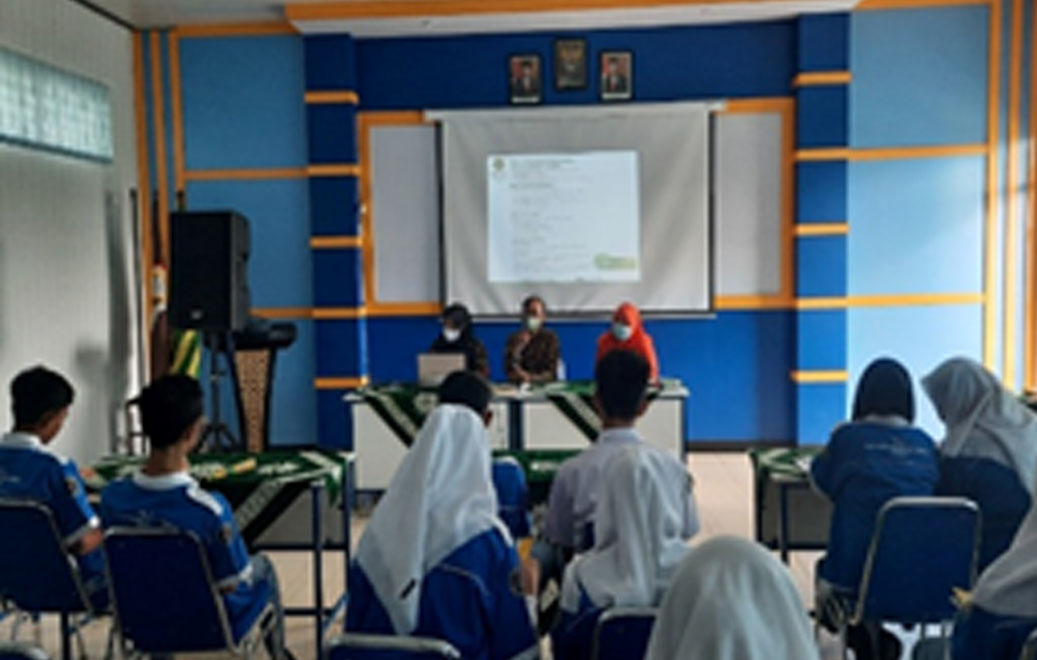
There are about 360 million adolescents in the world and about 20% are in the countries of the Southeast Asian region. The transition from childhood to adulthood involves dramatic changes in physical, sexual, psychological and social development, all occurring at the same time. Many health problems that arise in adolescents come from patterns and lifestyles that are less supportive of health. Lifestyles such as smoking, low-fiber diets, lack of exercise and insufficient rest time are problems experienced by many adolescents. One of the main factors that support poor lifestyle patterns is the lack of knowledge of adolescents. The results of the initial evaluation of 31 adolescents of SMK Muhammadiyah Pesantren in Kudus using 20 knowledge questionnaires about lifestyle found that 21 (67.8%) students had less knowledge of lifestyle patterns, 5 (16.1%) students had moderate knowledge and 5 (16.1%) students had good knowledge. Providing education is one method to increase adolescent knowledge in improving better lifestyle patterns. Health Education Engineering goes through the opening, implementation, evaluation and closing stages that last for 100 minutes. The evaluation results found that 8 (25.8%) students had less knowledge of lifestyle patterns, 11 (35.5) students had moderate knowledge and 12 (38.7%) had good knowledge. The provision of health education can increase adolescent knowledge in improving good lifestyle patterns to prevent various health problems in adolescents.
References
Adjunct, & Marniati. (2022). Pemberdayaan Kesehatan Masyarakat. PT. RajaGrafindo Persada - Rajawali Pers. https://books.google.co.id/books?id=csaVEAAAQBAJ
Ajani, A. T. (2023). Pengaruh Pendidikan Kesehatan terhadap Perilaku Pencarian Informasi Kesehatan pada Remaja di Sekolah. Journal on Education, 6(1), 1027–1034. https://doi.org/10.31004/joe.v6i1.3036
Arwani, & Purnomo. (2017). Pengaruh Pendidikan Kesehatan Bahaya Merokok Terhadap Perilaku Mengurangi Konsumsi Rokok Pada Remaja. Karya Ilmiah STIKES Telogorejo, 1(0), 1–7. http://ejournal.stikestelogorejo.ac.id/index.php/ilmukeperawatan/article/view/121
Hidayati, I. R., Pujiana, D., & Fadillah, M. (2019). Pengaruh Pendidikan Kesehatan Terhadap Pengetahuan Dan Sikap Siswa Tentang Bahaya Merokok Kelas Xi Sma Yayasan Wanita Kereta Api Palembang Tahun 2019. Jurnal Kesehatan, 12(2), 125–135. http://journals.ums.ac.id/index.php/JK/article/download/9769/5093
Pradiningtyas, F., & Ismawati, R. (2022). Hubungan Pengetahuan Pola Makan Sehat Dengan Kebiasaan Makan Remaja Kelas 12 Sma Negeri 1 Tarik Di Masa Pandemi Covid-19. Jurnal Gizi Universitas Negeri Surabaya, 2, 267–272.
United Nation Children’s Fund. (2021). Strategi Komunikasi Perubahan Sosial dan Perilaku: Meningkatkan Gizi Remaja di Indonesia. 1–66.
Wahyuningsih, S., Susmiati, & Deswita. (2023). Pendidikan Kesehatan Health Belief Model (Hbm) Terhadap Perilaku Diet Remaja. Journal of Telenursing (JOTING), 05(1), 1–7. https://journal.ipm2kpe.or.id/index.php/JOTING/article/view/4980/3387
World Health Organization (WHO). (2021). Adolescent and young adult health. World Health Organization.
World Health Organization (WHO). (2022). Adolescent health in the South-East Asia Region. World Health Organization. https://www.who.int/southeastasia/health-topics/adolescent-health#:~:text=WHO defines “Adolescents” as individuals,age range 10-24 years.
Downloads
Published
Issue
Section
License
Copyright (c) 2023 Journal of Philanthropy

This work is licensed under a Creative Commons Attribution-ShareAlike 4.0 International License.