Pelatihan Pengukuran Antropometri dan Edukasi Alat Kontrasepsi Pada Kader di Desa Sapen Manisrenggo Klaten
DOI:
https://doi.org/10.58353/jop.v1i2.104Keywords:
Anthropometry, Cadres, Contraceptive DevicesAbstract
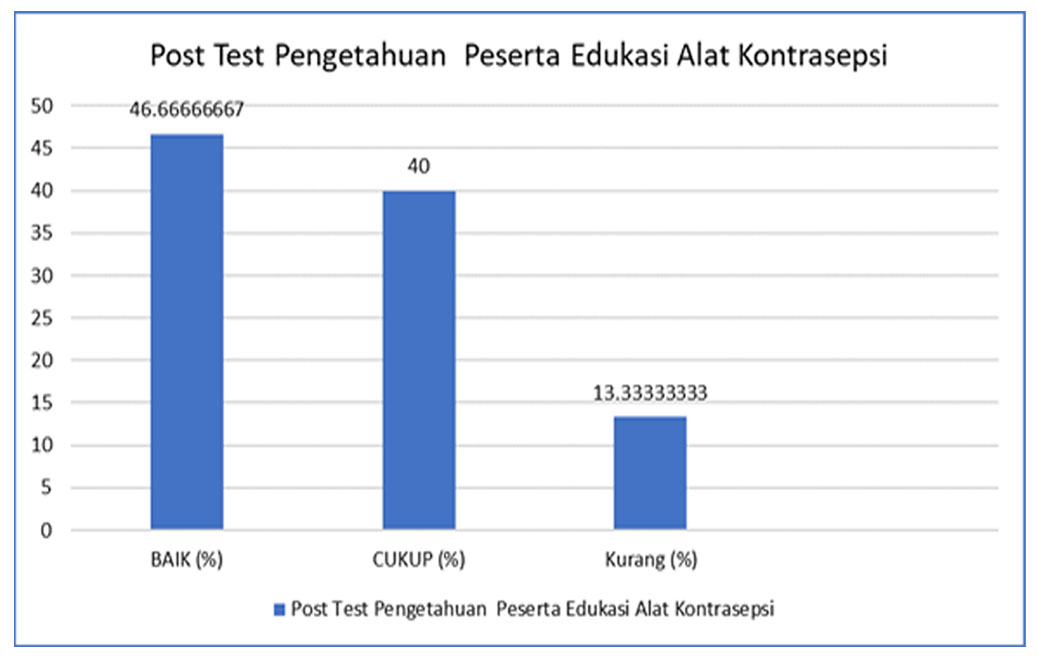
Anthropometry (body size) is a direct way of assessing nutritional status, especially the energy and protein state of a person's body. Food consumption and health (presence of infection) are environmental factors that influence anthropometry. The aim of this training is to increase the knowledge and skills of cadres in anthropometric measurements and education on contraceptives. The method of implementing training and education uses counseling and the practice of anthropometric measurements using a baby mannequin phantom. The number of participants was 15 Sapen Manisrenggo Klaten Village cadres. Implementation of activities in the early stages: participants are given a pretest in the form of a knowledge questionnaire to see how far participants know anthropometry and contraceptives before being given material and training. Implementation stage: activity participants are given training on anthropometric measurements and PPT material on anthropometry and education on contraceptives. In the evaluation phase, a post test was carried out in the form of a questionnaire similar to the initial pre test, to find out the extent of the knowledge and understanding of the participants in taking part in anthropometric measurement training and contraceptive education. From the results of the pre-test of anthropometric measurement knowledge of the cadre participants before the anthropometric measurement training was carried out with good knowledge of 0% and poor knowledge of = 73, 33%. From the results of the post test, the knowledge of cadre participants after training in anthropometric measurements was carried out with good knowledge = 66.66% and poor knowledge of 6.66%. From the results of the pre-test, knowledge of contraceptive education participants with good knowledge was 0% and less knowledge was 53.33%. From the results of the post test the knowledge of contraceptive education participants with good knowledge was 46.66% and less knowledge was 13.33%.
References
Donsu, J. 2017. Psikologi Keperawatan. Yogyakarta: Pustaka Baru Press.
Hartanto, H. 2004. Keluarga Berencana dan Kontrasepsi. Jakarta: Pustaka Sinar Harapan.
Mulyana, N., & Asiah, D. H. S. 2017. Pemberdayaan Perempuan Melalui Program Keluarga Berencana. Prosiding Penelitian dan Pengabdian kepada Masyarakat. Vol 4 (1), hal 93-103.
Muwarni, A., Sari, F., dan Julia K., J. (2023).
Pendidikan Kesehatan Hipertensi dan Cek Kesehatan di Dusun Tambalan, Pleret, Bantul, Yogyakarta, JOURNAL OF PHILANTHROPY: The Journal of Community Service, 1(1), 1-5
Notoatmojo. 2014. Ilmu Perilaku Kesehatan. Jakarta: Rineka Cipta.
Nurrizky, A. 2018. Perbandingan Antropometri Gizi Berdasarkan BB/U, TB/U, dan IMT/U Siswa SD Kelas Bawah Antara Dataran Tinggi dan Dataran Rendah Di Kabupaten Probolinggo (Studi Pada SDN Negororejo 1 Kecamatan Lumbang dan SDN Tongas Wetan 1 Kecamatan Tongas Kabupaten Probolinggo). Jurnal Pendidikan Olahraga dan Kesehatan. Vol 6 (1).
Putriningrum, R. 2012. Faktor-Faktor yang Mempengaruhi Ibu Dalam Pemilihan Kontrasepsi KB Suntik Di BPS Ruvina Surakarta. Jurnal Kesehatan Kusuma Husada. Vol 3 (1), hal 1-11.
Rusminah, R., Susanti, E. T., & Yuliyanti, D. 2018. Efek Samping Kontrasepsi Suntik Depo Medroxy Progesterone Asetat (DMPA) dan Cyclofem Pada Akseptor KB Suntik. Jurnal Keperawatan Karya Bhakti. Vol 4 (1), hal 21-24.
Ru’iya, S., & Sutarman, (2021). Pelatihan Self Management dalam Pengelolaan Waktu Efektif di SMK Muhammadiyah Pakem Sleman. Prosiding Seminar Nasional Hasil Pengabdian Kepada Masyarakat Universitas Ahmad Dahlan, 3(1), 495-501.
Siswosudarmo, HR. 2001. Teknologi Kontrasepsi. Dalam: Ginting, M. 2010. Analisis Faktor yang Berhubungan dengan Penggunaan Alat Kontrasepsi pada PUS di Desa Sukadame Kecamatan Tigapanah Kabupaten Karo Tahun 2010. Karya Tulis Ilmiah Fakultas Kedokteran, Universitas Sumatera Utara.
Downloads
Published
Issue
Section
License
Copyright (c) 2023 Journal of Philanthropy

This work is licensed under a Creative Commons Attribution-ShareAlike 4.0 International License.